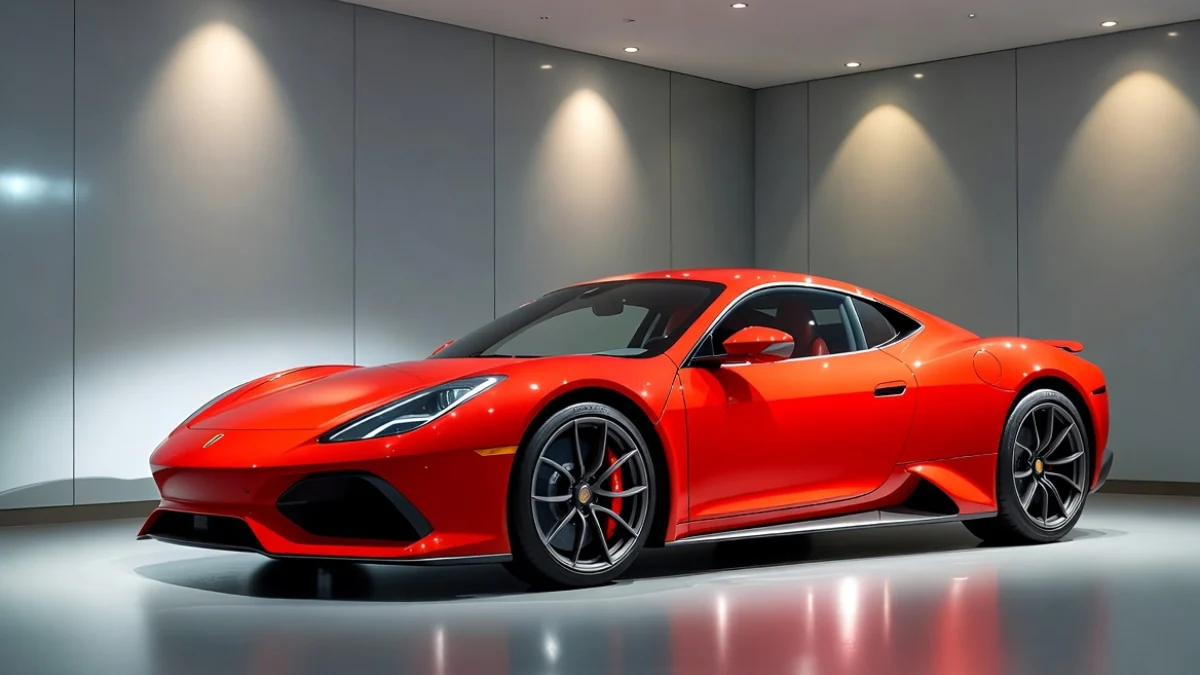
The global automotive landscape is accelerating through a period of unprecedented transformation, with this season’s launch updates crystallizing the industry’s definitive pivot. Manufacturers are no longer merely unveiling new models; they are deploying strategic visions for the future. Today’s announcements are dominated by the rapid expansion of electric vehicle (EV) portfolios, the integration of artificial intelligence as a core feature, and a fierce competition to redefine luxury, performance, and utility in a carbon-conscious era.
The Electric Surge: From Mainstream SUVs to Performance Icons
Electrification is the unequivocal headline. Hyundai has just unveiled the global 2025 IONIQ 9, a large three-row electric SUV that directly targets families seeking space and range, boasting an estimated 550 km range on a single charge. Simultaneously, the performance segment is charging forward, with Porsche releasing final specifications for the all-electric Macan EV, confirming blistering acceleration and a premium interior focused on a curved digital dashboard. These launches signal that EVs are now competing in every high-volume and high-margin segment, moving beyond niche early-adopter offerings.
AI and Software-Defined Vehicles Take Center Stage
The most profound shift is the announcement of cars as “computers on wheels.” Mercedes-Benz has launched the updated 2025 E-Class globally, with a heavy emphasis on its new MB.OS-powered “Hyperscreen” and integrated AI assistant capable of more natural voice commands and predictive comfort adjustments. Following suit, General Motors has begun deliveries of the 2025 Cadillac Optiq, highlighting its Ultifi software platform that enables over-the-air updates for everything from performance tuning to autonomous driving capabilities. The car launch is now a software launch.
Internal Combustion Evolves: Strategic Hybrids and Last Hurrahs
Despite the EV wave, strategic internal combustion engine (ICE) launches continue, almost exclusively with electrified assistance. Toyota has officially launched the next-generation 2025 Camry exclusively as a hybrid, underscoring its commitment to this technology as a mainstream bridge. In the luxury sphere, BMW has unveiled the 2025 5 Series Sedan with a strong plug-in hybrid variant offering nearly 100 km of electric-only range. Conversely, brands like Lexus have teased what may be one of the final, purely ICE-powered F performance models, marking the end of an era for purists.
The Redefinition of Luxury and Sustainable Materials
New luxury car launches are increasingly defined by sustainability and digital well-being. Volvo has debuted the fully electric EX90, focusing its launch narrative on its Nordico interior—a premium material made from recycled PET bottles, pine resin, and cork. It also highlights its state-of-the-art LIDAR and sensor suite for safety. Similarly, Audi’s latest Q6 e-tron launch emphasizes its new Organic Light-Emitting Diode (OLED) lighting technology and interior materials sourced through certified supply chains, making luxury synonymous with responsibility.
A Market at an Inflection Point: Choice, Complexity, and Convergence
The collective weight of these updates confirms the automotive market is at a major inflection point. Consumers now face a complex but exciting triad of choices: embrace a fully electric future, adopt a sophisticated hybrid transition, or acquire what may be the last generation of pure ICE performance icons. Every launch, whether EV, hybrid, or ICE, is now inseparably bundled with a narrative of advanced software, AI integration, and material innovation. For the buyer, this means more capability, connectivity, and personalization than ever before. For the industry, it marks the thrilling and turbulent convergence of the mechanical and the digital, setting a breakneck pace for innovation that will define mobility for the next decade.